News & Information Blog
Practical safety insights, best practices, and industry updates for manufacturing and construction professionals.

Hazard Communication 2026 Deadline
OSHA extended the compliance dates for its 2024 Hazard Communication Standard update, but employers still have important work ahead. With the next federal employer deadline approaching, now is a good time to review revised Safety Data Sheets, workplace labeling, written HazCom programs, and employee training needs. Here’s what the updated timeline means and what employers can be doing now.
Continue reading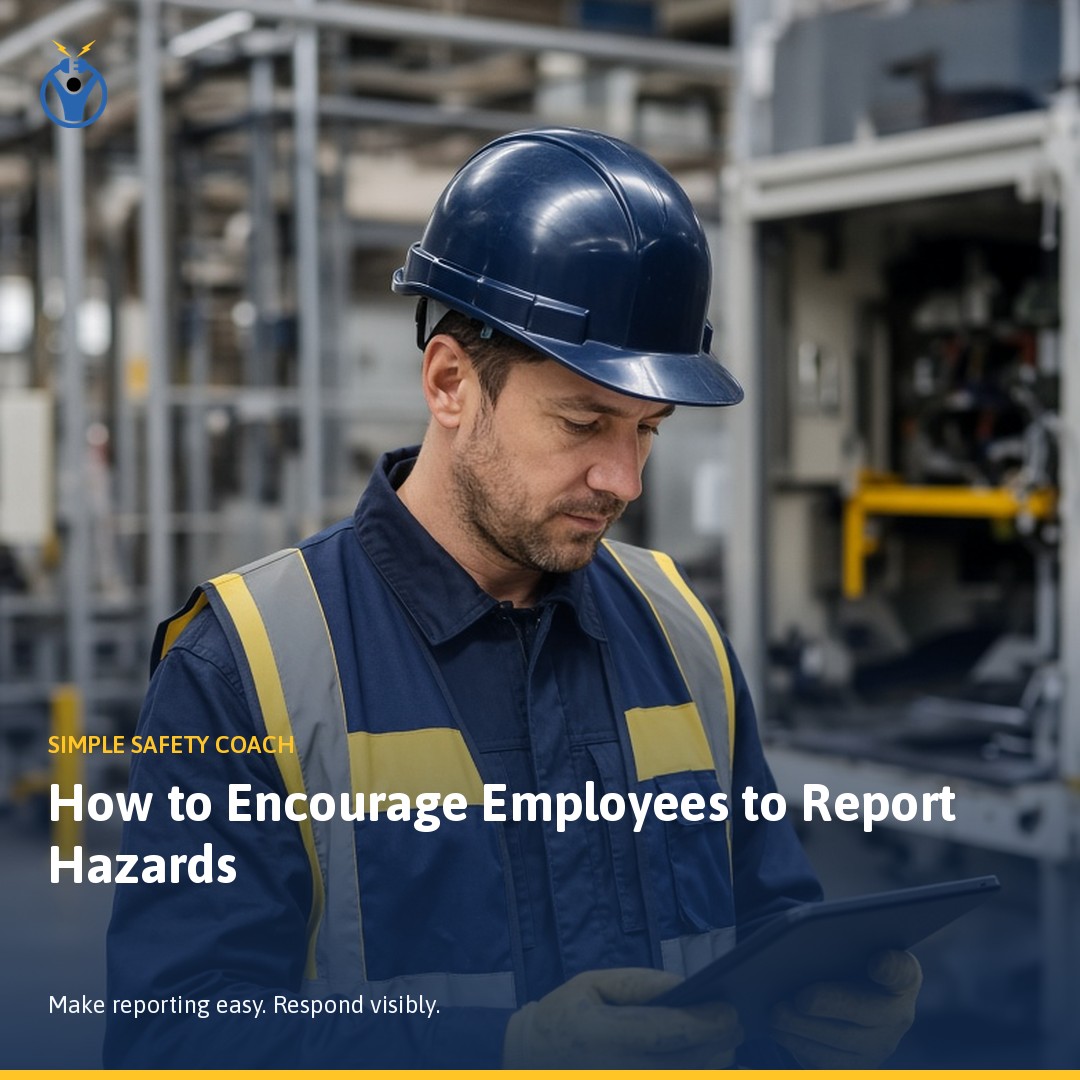
How to Encourage Employees to Report Hazards
Nearly every safety professional has experienced the same frustration. Two employees notice the same hazard. One reports it immediately. The other assumes someone else will take care of it. The difference is rarely whether they care about safety. More often, it reflects whether the organization has created an environment where reporting is simple, worthwhile, and supported.
Continue reading
Deciphering OSHA Standards Format
OSHA standards are precise, hierarchical, and often misunderstood. This article breaks down how to read OSHA citations like 29 CFR 1910.178(l)(2), explains how to navigate OSHA’s website to find exact requirements, and introduces how modern tools, including AI, can help safety professionals interpret standards more efficiently and confidently.
Continue reading
7 Proven Cost Estimation Methods for Smarter Safety Decisions
In an era of escalating workplace risks and costs proactive safety investments deliver strong returns, often 24%+ ROI while slashing incident rates up to 74%. This updated 2026 guide explores Return on Safety Investment (ROSI), explaining how to calculate it by comparing hazard prevention costs against potential incident losses.
Continue reading
Safety Participation Tracking
For decades, workplace safety programs have been measured by what didn’t happen: fewer injuries, fewer OSHA citations, fewer lost-time cases. While these metrics still matter, they only tell part of the story — and often too late.
Leading organizations are shifting focus toward something far more proactive: tracking safety participation.
Continue reading
Safety Observations in High-Turnover, Mobile Workforces: A Smarter Approach
In many industries, safety leaders face a persistent challenge: how do you capture meaningful safety observations when your workforce is constantly changing, widely distributed, or rarely sits at a desk? This is where a simpler, more accessible approach becomes essential.
Continue reading
Why Every Safety Manager Needs a Centralized Inspection Repository in 2026
By 2026, "I think the latest Confined Space checklist is in that shared drive somewhere" will no longer be an acceptable answer when OSHA shows up unannounced. This article reveals why we're at the breaking point for decentralized checklists, the hidden costs of inaction, and how Simple Safety Coach gives you the necessary tools to excel.
Continue reading
OSHA's SAFE (Safety and Health Achievement Recognition Program) initiative.
In today's regulatory climate, demonstrating top-tier safety isn't just about compliance - it's about culture, credibility, and competitive advantage. The SHARP program from Occupational Safety and Health Administration (OSHA) recognizes small to medium-sized worksites that operate exemplary safety and health management systems. This article explains what SHARP is, which companies should explore it, and how Simple Safety Coach can streamline your path toward SHARP recognition.
Continue reading
Lithium-Ion Battery Safety in the Workplace
Lithium-ion batteries are common in today’s workplaces, powering tools, devices, and equipment. But when damaged or improperly charged, they can pose fire and injury risks. This article breaks battery safety down into clear, practical steps that employees and supervisors can follow, with guidance on storage, charging areas, recognizing warning signs, and responding to incidents.
Continue reading
OSHA's 2025 Fines
As I'm sure you are already aware, OSHA updated its civil penalty structure for 2025, raising fines for serious, willful, and repeated violations. These changes make it more important than ever for employers to proactively identify hazards and ensure compliance. Small businesses also now have expanded opportunities for penalty reductions when hazards are corrected promptly.
Continue reading